
Choosing the right toe protectors
How do you choose the right toe protectors for you?
The right choice for your training and your performance
You need toe pads to ensure good contact with your pointe shoes. This is the only way to control your precious pointe shoes and your movements. Even though many dancers often forget them, toe pads are extremely important if you want to dance really well. Why not have a look at some YouTube videos of famous dancers and their stage preparations? You’ll almost always see them using some sort of toe pads. And that’s despite the fact that these dancers, of course, have completely bespoke pointe shoes. Nevertheless, they still use toe pads as well. Of course they can dance perfectly, but the right pads simply give them even better control and even better protection during training and performances.
What is the purpose of a toe protector?
In principle, there are three tasks:
1) Protection against pressure sores
2) Protection against friction
3) Protection against impact during jumps or fast combinations
Pointe shoes have a specific shape. Feet don’t usually fit perfectly into pointe shoes. That’s why dancers often partially alter the structure of the shoes („break them in“) by applying significant mechanical pressure to make them a little more flexible. This improves the fit and allows the pointe shoes to mould better to the feet. The downside is that this causes the shoes to wear out more quickly (unfortunately!) and provides much less support.
The stiff structure of pointe shoes
It certainly serves a purpose, as it allows the shoe to distribute the forces acting on your foot more effectively. However, if this rigid structure is already slightly damaged or worn, the forces can no longer be distributed as effectively.
What forces
[When do forces come into play in ballet? Whenever you jump (sautés) or perform quick steps and turns.
As a rule of thumb, remember this: whenever you can hear your pointe shoes on the dance floor, greater forces are naturally acting on your shoe – and consequently on your foot. We measured this ourselves in our dance laboratory with dancers and came up with some truly astonishing figures!]
“Breaking in” pointe shoes
This means that with pointe shoes that have already been worn or worked into, you have to engage far more muscles in your foot to achieve the ideal contact and to be able to really guide and control your shoe. You should only do this if you’re very well trained! A much better and simpler option is to use the right toe protectors. We often think that toe protectors simply go inside the shoe and then take the pressure off.
That’s not true at all – or rather, it’s completely wrong when it comes to really good toe protectors. The range here is much wider.
You can recognise standard toe protectors by the fact that they’re actually quite hard compared to your skin or muscles. Although they do bend, they simply aren’t flexible or elastic enough to fulfil their protective function properly. They do protect against grazes or scratches inside your shoe, but they don’t properly absorb pressure because they’re harder than your foot.
It all comes down to the material!
Think of it like this: first comes the shoe, then the material of your toe cap, and then your foot. When pressure is applied to the whole structure, the part that can deform most easily absorbs the forces. We call this the material’s plasticity. With very good toe protectors, it’s the toe protector itself that does this. It absorbs the forces that might otherwise injure your foot.
With standard toe protectors, which are much less flexible and also less elastic, your foot absorbs most of the impact rather than the toe protector, as it really should! That’s why many dancers are disappointed with standard toe pads and then try to pad out their shoes with completely unsuitable materials such as cotton wool, paper, etc. Don’t do that! You’ll end up distorting your precious pointe shoes and making it harder for your foot muscles to move properly.
Dance Laboratory and Development
This statement is based on actual measurements we carried out in our dance laboratory with real dancers. Take cotton wool, for example – you’d think it’s a super-soft material that’s ideal for cushioning – but it doesn’t cushion impacts and blows at all. Quite the opposite, in fact – it actually transfers even more of the impact directly to the foot! Why is that? If you stuff cotton wool or a similar material into your shoe, it’s only soft right at the start. After a few minutes, it’s already been compressed quite heavily and then actually behaves like a relatively hard material. That’s why it transmits impacts and jolts – such as those that occur during an Échappé Seconde, for example – directly to your foot, without any cushioning at all.
You can hear and feel vibrations
What causes you pain during training and also during performances are the vibrations that occur when you land back on the floor after turns or jumps. You can hear it yourself, too. Any movement where you can hear the sound of your pointe shoes on the floor also causes vibrations in your shoe and, consequently, in your foot. And it is precisely these vibrations that can ultimately cause you pain or lead to grazes when the shoe and foot move against each other. Good toe pads cushion precisely these vibrations and help you to fully control your brilliant pointe shoes. This gives you real control over your movements and, more importantly, ensures you engage exactly the right muscles you need! You’ll learn to dance faster and better!
Plasticity of the material
One thing is clear: a material that is intended to absorb pressure and forces in place of your foot must be softer and more easily deformable (we call this ‘plastic’), whilst still retaining a very high degree of elasticity. Only then can the material absorb forces at all.
In other words, choosing the right toe protector depends, of course, on your shoes (or, to be more precise, on their shape and how much space you have left – which depends on the shape of your foot) and on the suppleness of your foot muscles. If you train a lot – for example, more than three or four times a week – and/or if you’re a professional dancer, then you’ll have a very muscular, very well-trained foot that’s relatively firm. You can, of course, dance wonderfully well with very soft toe pads, but you could also use a slightly more durable material. With our products, you could do well to use the *medium soft* material, which we’ve developed especially for highly trained dancers. Although the material is called *medium soft*, it’s still much more flexible than any other material on the market.
Training and the Stage
Of course, as a professional ballet dancer, you can also dance in our *super soft* fabric. You’re free to choose whichever you prefer. This fabric is usually very well suited to dancers who are already well-trained – for example, those who dance once or twice a week. The material is softer and more pliable, yet still has a very high level of elasticity. We’ve developed our material so that it reacts with a slight delay. This ensures it behaves perfectly depending on the load: if you’re under little strain – for example, if you’re not jumping but simply standing on your toes – it’s simply soft and comfortable. You can feel the floor and every movement inside the shoe. It only provides greater cushioning under high loads. We call this non-linear behaviour. We’ve developed this property in our materials (all our toe pads have this characteristic) to make them ideally suited to ballet.
The standard toe caps available on the market usually have an unbalanced ratio between flexibility (if they have any at all) and elasticity. They can only meet some of the requirements placed on a toe cap. However, for basic requirements – such as protection against abrasions – they are perfectly suitable. If you use these toe caps, you should ensure that they do not have a textured surface. In other words, nothing that might crease, shift or compress over time, otherwise you’ll end up with the opposite effect – just as compressed wadding would.
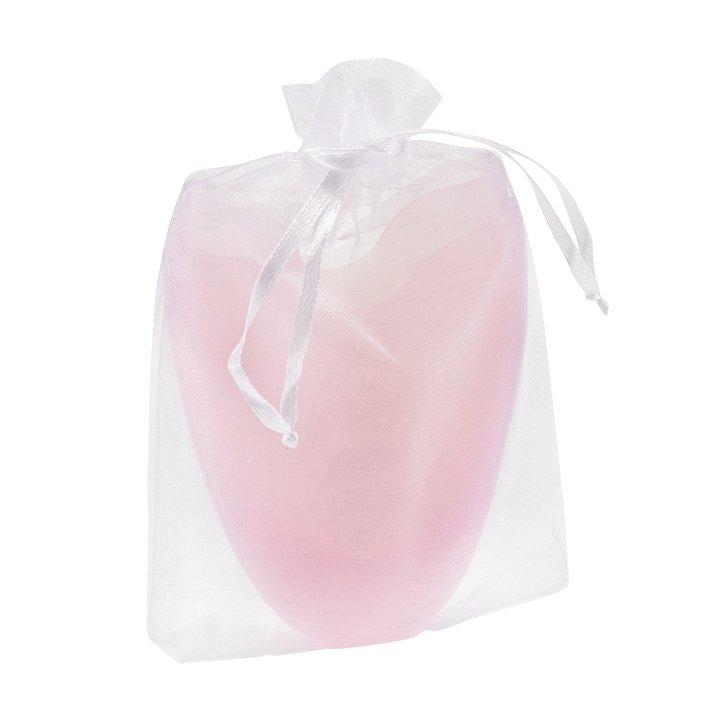
Learn to dance faster and better
Are you just starting out on your ballet career and are your feet still very sensitive? Choose the most flexible toe pads you can find, but make sure they’re also highly elastic. With these, you’ll feel as though you’re dancing on clouds. This isn’t just great because you’ll suddenly be able to dance with much less pressure – or even without any pain at all – but they’ll also help you execute the movements correctly.
The right muscle groups
When we’re in pain, we find it very difficult to engage the right muscle groups – we end up making movements that are actually incorrect, simply to compensate for the pain. If you don’t do anything about this, you’ll develop bad habits that are very difficult to break later on. Make sure you use good toe protectors, especially at the start of your dancing career! They protect your feet and they also protect your precious pointe shoes, as they’ll last longer and you won’t wear them out so quickly.
Some toe protectors have padding at the toes, which offers better protection. Here, too, the choice depends on what you’re trying to achieve. We’ve designed our toe protectors so that these small toe pads are soft enough to be pushed aside. This allows them to fill in the gaps created by the shape of your foot. So, for example, if you have an ‘Egyptian’ foot shape with quite a lot of space in the toe box of your pointe shoes, then toe pads with toe cushions are ideal for you. The material is pushed slightly to the side and then fills in the gaps a little. This gives you greater stability and much more control over your pointe shoe. Only then can you really make the most of your pointe shoe. So, for us, whether you choose with or without padding depends more on your foot shape.
Foot shape
With standard toe protectors, having more material in the shoe naturally helps if you have a tapered foot shape. However, this only works if the padding is very flexible and elastic. Only then can it adapt effectively and respond to the stresses placed on it.
We develop our toe protectors in our own laboratory with our own researchers. We believe that the only way to produce truly good products is to have full control over the entire development and manufacturing process ourselves. As a result, we now have materials that are non-linear and which probably offer the highest levels of plasticity and elasticity available. If your requirements are simpler – for example, protection only in a specific situation or under a specific load – standard toe caps may well be the ideal solution for you.
 Deutsch
 English
 Français
 Italiano
 Deutsch (Österreich)
 Deutsch (Schweiz)
 Français du Canada
 English (UK)
 日本語
日本語 한국어
한국어